
What WD-40® Multi-Use Product Is Safe On (and What to Avoid)
<< BackWD-40 Multi-Use Product protects metal from rust and corrosion, penetrates stuck parts, displaces moisture, and lubricates almost anything. That versatility is why it’s trusted for thousands of uses in homes, garages, workshops, and job sites worldwide. In fact, it’s much easier to list the few surfaces to avoid than everything it can be used on.
Quick Guide
WD-40 Multi-Use Product is safe on:
Metal • Rubber • Wood • Most plastics • Painted metal
Avoid using on:
Polycarbonate plastics (safety glasses, headlight lenses)
Clear polystyrene plastics (CD cases, rigid food packaging)
Pro-Tip: When in doubt, test on a small, hidden area first.
WD-40 Multi-Use Product Is Safe to Use On
Metal
- Tools, hinges, chains, gears, and fasteners
- Bare steel and outdoor equipment
- Automotive and bike components
- Cast iron and stainless-steel surfaces
Rubber
- Seals, gaskets, and O-rings
- Helps prevent drying and cracking
Wood
- Removes scuff marks
- Helps loosen stuck wooden parts
Plastic (most types)
- Vinyl, nylon, and many hard plastics
- Always spot-test if unsure
Painted Metal
- Safe when used as directed
- Helps remove grime, adhesive residue, and tar
- Won’t harm paint
Surfaces to Avoid
While WD-40® Multi-Use Product is safe on most materials, avoid using it on:
Polycarbonate plastic, such as:
- Safety glasses and face shields
- Clear machine guards or protective covers
- Headlight lenses
- Impact-resistant clear panels
Clear polystyrene plastic, such as:
- CD and DVD cases
- Clear disposable cutlery
- Rigid clear food containers or packaging
- Some clear display cases
These materials can react poorly with petroleum-based products. Always spot-test first.
FAQs
Is WD-40® Multi-Use Product safe on plastic?
Yes, on most plastics. Avoid polycarbonate and clear polystyrene.
Will WD-40 Multi-Use Product damage paint?
No. It’s safe on painted metal when used as directed.
Can I use WD-40 Multi-Use Product on wet equipment?
Yes. It displaces moisture to help restore engines, spark plugs, and power tools.
What if I’m unsure about a surface?
Test a small, hidden area first.
FEATURED PRODUCTS

NEW WD-40® Multi-Use Product Low Odor
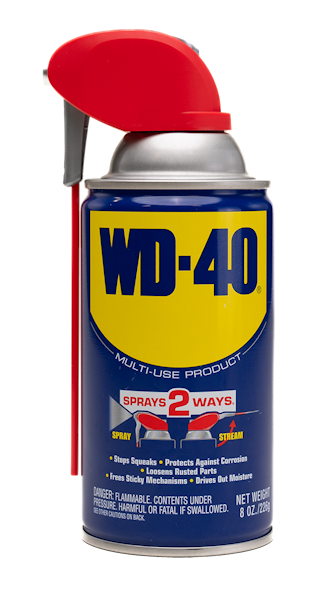
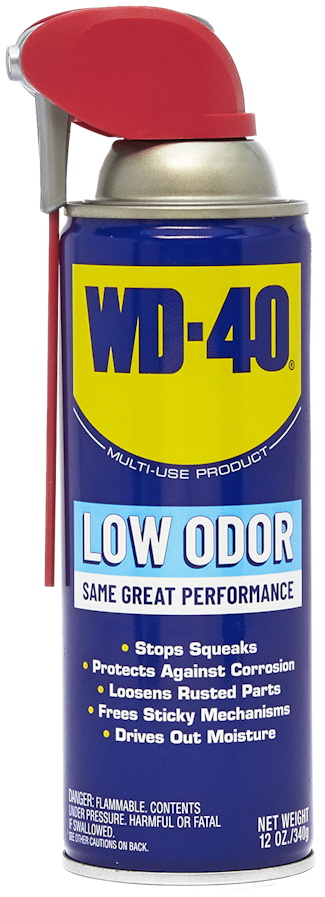
Meet WD-40® Low Odor — the Classic WD-40® Product you trust, now with less smell. Whether you're dealing with squeaky hinges in a confined space or a sticky gear shift in a car, WD-40® Low Odor ensures the same great performance of the Classic WD-40® Product with less smell.
RELATED ARTICLES
How to Clean Gardening Tools: How to Clean Gardening Tools
It's time to get your tools out of storage and ready for that essential gardening season.
READ MORE
WD-40 Specialist: A Problem-Solver For Outdoor Projects: Discover how WD-40 specialist products can solve common outdoor project issues, from rust removal to lubrication. Learn tips for using WD-40 specialist products effectively in your outdoor maintenance.
In outdoor projects of all kinds, the challenges associated with environmental factors are relentless. Equipment and tools are constantly exposed to the elements, leading to rust, grime buildup and water damage. Luckily, the range of products provided by WD-40 Specialist® products can help transform your outdoor challenges into outdoor victories. In today’s piece, we explore how the use of WD-40 Specialist® products in outdoor projects can help remove and prevent rust, clean, degrease and lubricate, all while protecting your equipment and tools against water damage.
READ MORE
How to Clean Gardening Tools: How to Clean Gardening Tools
It's time to get your tools out of storage and ready for that essential gardening season.
READ MOREWANT TO GET MORE TIPS AND TRICKS?
SUBSCRIBE TO THE NEWSLETTER